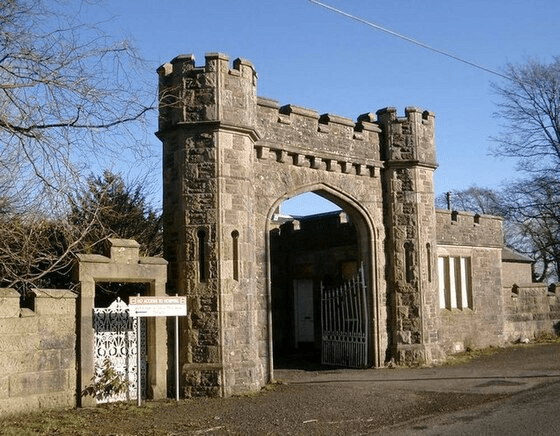
No, actually, not so very fun at all.
When I started doing genealogy research, my kids immediately asked me if there were slave-holders in the family. Honestly? I was asking the same question. From what I could ascertain, the branch of the MacKirdys who arrived in the US were descended from five or six brothers who were chased out of the Isle of Bute in Scotland in 1660, arrived in Northern Ireland after rowing a boat in a snowstorm (possibly one of the brothers fell out of the boat into the sea), toiled there a while while changing the spelling of their name, and then took off for the US – coming through the US South and migrating to Oklahoma. Where Grandma McCurdy met Grandpa Nixon and that was that.
What I told my kids at the time was that it wasn’t so much that the MacKirdys didn’t own slaves. They didn’t have the opportunity. They were poor. They may well have been white supremecists, but they didn’t have the means to act on that beyond everyday prejudice.
Well, turns out there were other MacKirdys who stayed in Scotland. One of them was briefly a baron. He died on the passage between Northern Ireland and Scotland – also drowning in the sea – and his widow trusted the estate to the Stuarts of Bute. One of the sons, possibly more, went inland, and then to British Guyana. Meanwhile, the Stuarts of Bute not only looked after the Bute estate, Garrochty, but…yoinked it.
So the son who went to the Caribbean did the thing that British people in the late 1700s/early 1800s did in the Caribbean. He turned a shipbuilding business into a plantation. There were, from what I have read, about sixty slaves. In 1810, this ancestor sold off his entire Guyanan assets – including people – and came back to Scotland. He had a large house built, called Birkwood House or Birkwood Castle, in Lanarkshire.
It’s haunted.
Not by slaves. It should be haunted by slaves. No, this house is haunted by some guy smoking a cigar, and another guy who’s been stabbed through the throat.
The house is now owned by no one. And it’s not a grand country estate anymore. It became a psychiatric hospital for children in 1923, for “mental defectives.” That description makes me think of Willowbrook, here on Staten Island. So it should also be haunted by the boys and girls who were tortured there for years and years.
That hospital closed in 2002 – a full fifteen years after Willowbrook was shut down. There were plans to convert it to a hotel, which went in and out of various approval stages, until 2015. That was the year a full third of the house collapsed.
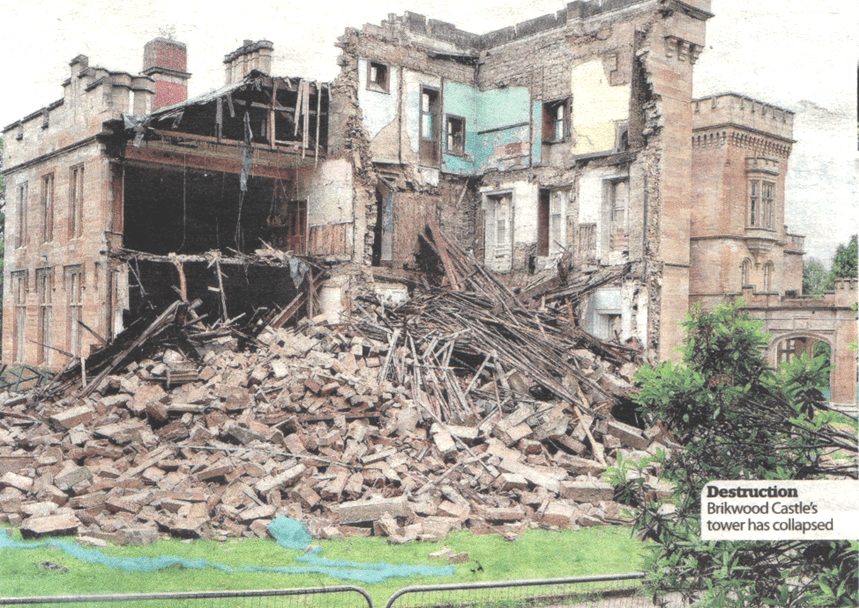
Apparently, the west wing addition was hurriedly built in 1890 to accommodate a royal visit that never came to pass.
I just got back from watching the Downton Abbey movie with my very dear friend and her husband. The saga of all the contortions that a family had to go through to keep their great manor house – and all their tenants – was resolved in typical Julian Fellowes fashion: much drama, low stakes, everyone’s happy at the end. But the manor house in which it’s filmed, Highclere Castle, also has a major association with the slave trade which is elided in the show and movies. Not to mention that one of the Earls of Carnarvon was also a plunderer of Egyptian graves and antiquities.
I loved the movie – I’m a sucker for anything Julian Fellowes does – but he has a tendency to avoid the discomfort of colonialism in his light portrayals of the upper classes in both England and New York. Somehow, all his barons and earls and marquesses and magnates never dabble in exploitation, and yet manage to have all this terrific wealth. Which they’ve somehow inherited from equally blameless predecessors. They’re generous landlords, robber barons who are somehow not robbing anyone, full of equinaminity and largesse, only wanting to send their daughters into society or establish an opera house.
It’s escapism. But bumping down to earth and digging into the least of one’s heritage as a white person of UK descent, you’re going to find some ugly facts. Yes, my immediate ancestors were too poor to have slaves. But Grandma and Grandpa lived in Oklahoma City, a ninety-minute drive from Tulsa, and I only found out about the Tulsa Massacre in the 2010s. I don’t think my father even knew about it, and he grew up in OKC. It was kept a secret for a long time, and he died before I learned about it and could ask him.
So even if there’s poverty, racism remains.
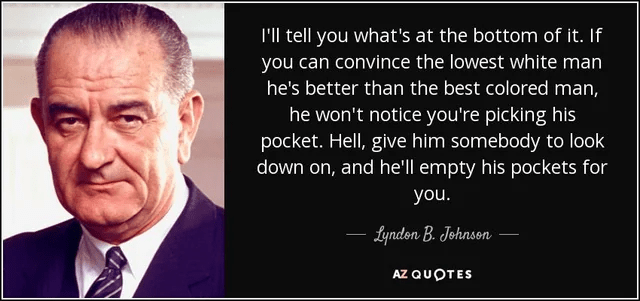
I remember one Thanksgiving, my grandparents came to stay with us – I must have been about 9 or 10. We were watching the Thanksgiving Day parade on TV, and there was a HBCU band performing, with stellar majorettes and almost military-level moves. Grandpa said, “But they’re all colored!” and my dad hushed him. Dad seemed appalled. I was too young to know what was going on, but it stuck with me. That Grandpa couldn’t accept Black excellence. That Dad was embarrassed by that fact.
And that, given the chance, my forebears would have continued the repression and exploitation and colonization to “maintain the family home,” as energetically and enthusiastically as the sinless Crawley family hung on to Downton Abbey.
It’s nice to have fantasies, to escape for a while. And sure, tiaras are lovely – I never object to a tiara. But in the real world, this shit comes at a cost. A very human cost of thousands and millions of lives.
So I’m glad Birkwood House is destined for destruction. It deserves to be, and the ground should be strewn with salt so that nothing grows there ever again.
 New Virago
Leave a comment