I’d posted some kind of throwaway comment on Reddit about newspapers – physical ones – and how editorial assistants in New York City would get all three of the major papers and read them on the subway on the way to work, folded specially so as not to interfere with your neighbor who was also reading their paper. And a young person asked me to say more, saying it was glamorous.
I never thought of any of this as glamorous. Normally, I don’t talk about this stuff – I guess in the way veterans don’t talk about the war they fought in. It’s not easy for me. It was a hard time – yes, glamorous, but also very hard, with squalor and never having enough money, and the terror of being a single young woman in New York with few resources and fewer friends, and easy prey.
But I was asked to write about it. And this is what it was like, at least for me, to work in the book world in the late 1980s.
I had scholarships and financial aid, and went to Mount Holyoke College. That part’s important – my parents were not wealthy. They were Presbyterian ministers, and we lived in a little hick town in Southern Delaware. I was very lucky to have internships in college – at Rolling Stone, at Simon & Schuster – thanks to a professor/mentor. And I could stay with alumni in the city – never for long, and I was paying them rent. So I had those kindnesses going for me.
Rolling Stone in 1986 was really wild. Jann Wenner was still a coke-addled blowhard, storming around the office all sweaty and red-faced, his belly protruding like a bass drum in a marching band. Kurt Loder was there (this was before his stint at MTV). I came into the office one day and Michael Douglas was sitting at the secretary’s desk opposite mine – he apparently needed a typewriter and was friends with the managing editor. This was well before computers were part of the everyday workplace. (Computers were big things that you had to get laboratory time to use.)
The day that the space shuttle Challenger took off, the editorial staff were all crowded in the managing editor’s office, watching it on TV because that crew included the first civilian to go into space. I remember watching…and not seeing the explosion. Because I didn’t expect to see it. Mostly what I remember is the look on the faces of everyone else in the room – the horror. The silence. And it was silent…until it wasn’t. About 15 minutes later, all the phones began to ring, and P.J. O’Rourke was yelling that we’d have to be crazy to send him up there. Apparently he’d been next on the list of civilians to go up, and he was going to write a piece on it.
I forwarded Hunter S. Thompson’s mail. I rejected tons of submissions. I also slept in a sleeping bag on the floor of an apartment in the East Village, just above the Pyramid Club (and I regret never going there). It was the tail end of the 80s, but there were plenty of people with mohawks and piercings and tattoos and spiky things and a lot of plaid. What I learned was that the more spiky and tattooed, the gentler and kinder the person was behind the “don’t come near me” facade – these presentations were a form of self-defense, of armor. I would go to a bar named Downtown Beirut, which was about the size of my kitchen, and the only room to sit was ON the jukebox.
After I graduated, I worked in Boston for a summer at a market research firm, and then (through this same professor/mentor) got a job as an editorial assistant at Doubleday. This was 1987.
As I said, I had few connections, and the ones I had were useless in terms of practical needs. I wound up renting a room on the 11th floor in an SRO that still exists today – it’s called the Midway Hotel, on 100th Street and Broadway. The pitch was that it was an up-and-coming place for artists. The reality was, it was (and still is) a flophouse. My next door neighbors were a pimp and his prostitute. Down the hall, a heroin addict watched the elevators – I guess that was what he liked to do. He was very sweet, though – I liked him. My second month there, there was a shooting two floors below me. The cops shut down the elevators, and as I climbed the stairs, I was met with a large woman in a white dress, who I later found out was a Santería priestess – I guess she was trying to calm the vibe?
And the cockroaches. At one point I put up Combat traps all over my walls and baseboards; my mother sent me a vacuum cleaner so I could sweep up the corpses. I had mice – I got a feral kitten from a nearby vacant lot. I had a gas leak that I didn’t even know about, and was lucky I didn’t blow the place sky-high every time I lit a match. Which was frequently – I’d taken up smoking.
The job was a whole other world. I was the assistant to an editor named Jim Fitzgerald. He was irascible, an alcoholic, an incredibly angry man who had unnerving moments of kindness and humor. I felt I could never do the right thing by him – what I didn’t realize was that he was, more or less, abusive to all his assistants. One day he came back from lunch six sheets to the wind, and spent the afternoon screaming on the phone at Sam Snead’s agent, while I cowered at my desk outside his office.
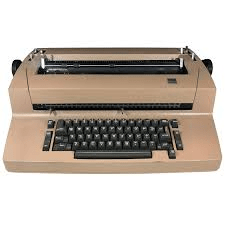
And yes, everyone smoked. Ashtrays on every desk. IBM typewriters that clattered all day every day. Mounds and mounds of paper – post-it notes were relatively new then, and they stuck out in every manuscript, giving me paper cuts on the regular. Yes, we each read three newspapers a day, if not four: the Times (plus doing crossword puzzle races that I would always lose), the Post (before the Murdoch era), and the Daily News. The more enterprising of us also grabbed the Wall Street Journal (again, pre-Murdoch). Snatching the papers and our cigarettes from the newsstands before hopping on the subway were some of the most satisfying moments.
The glamor: well, Jacqueline Onassis worked two doors up from my boss. She wasn’t in the office full-time, but when she was, she would tell the assistants things like, “If you want to lose weight, girls, have your maid cut up carrots and celery for you to bring to work.” Most of us did not have maids; most of us qualified for food stamps. The salary was wretched, hence my living situation.
Jackie had brought in Ambassador Heyward Isham as a contributing editor – he used to attend these grand lunches and bring the assistants back little butterscotch candies. It was very cute and touching.
The managing editor was a young man named David Gernert – he later went on to be John Grisham’s agent. For a long time, Grisham was his only client.
Then there were the authors. One day I picked up the phone and it was Bill Cosby – and he sounded scary-mad. Very rattling for me – I’d been brought up on Cosby’s comedy albums; my father loved him. Fortunately, Cosby’s editor’s assistant came back to his desk and took the call – and let me tell you, Bill Cosby is a mean, mean man. (I later married that assistant, had two daughters, and we divorced.) I just thought that Cosby was being a Terrifying Businessman; I had no idea that was really his nature.
And Gene Simmons. Again, my phone rang (we did not have caller ID back then!), and the receptionist out front told me that a Gene Simmons was here to see Jim. I did all of Jim’s appointments; I knew for a fact that this was a walk-in. And I kind of didn’t believe it – how ludicrous for a major rock star to just show up without setting anything up in advance? Didn’t he have a secretary?
But when I went out to the lobby, there he was, in a pair of snakeskin boots with a large portfolio beside him. He was constantly licking his lips – coked out of his skull, was my impression. That day I was dressed very primly – a long black skirt and a blouse that buttoned up to my neck, like a prairie schoolmarm. I walked him back to Jim’s office and fully expected to go back to my desk, but Jim beckoned me in.
I pretended to take notes.
Gene’s proposal was a pictorial. A coffee-table book. Photos of the women he’d slept with. Essentially an album of totems – it was purely self-serving. Jim tried to guide him – he was very good at that – into more of a conventional memoir. But Gene was having none of it. He wanted this album.
At which point he asked (told?) me to open the portfolio. I had to take it out of Jim’s office to my desk – it was very large – to unzip it. Inside were hundreds, if not thousands, of Polaroid photos of topless women.
“What do you think?” Gene said.
I zipped the portfolio back up. “Here you go,” I said, giving it back to him.
Over the next few weeks, while the negotiations were happening, I had free tickets to KISS shows, with VIP passes backstage. I went, and took friends, including my now ex-husband, but essentially they were wasted on me. I could never be a real fan.
And then there was Elaine’s. My professor/mentor had started inviting me there when I was still an intern. I met all kinds of writers – Lewis Lapham, Jay McInerney, Carl Bernstein, E. Jean Carroll, Jerzy Kosinski. Bret Ellis hung out there – I knew him from a summer writing workshop at Bennington. Elaine really liked writers. One evening I found myself sitting next to the author of Forrest Gump (yes, it was a book before it was a movie).
I started dating someone I’d met there: Anthony Haden-Guest, a journalist and art critic, who is the brother of actor Christopher Guest. (Who is now Baron Haden-Guest.) Anthony was quite literally old enough to be my father, and he and I ran around to a lot of art events and house parties and came to Elaine’s 25th anniversary party. That was a weird experience – I was just an editorial assistant, and I got out of the taxi and walked up to the entrance, and there were photographers and reporters yelling, “WHO ARE YOU” while I waited to have my name checked off by security. I was nobody. But I was there.
Anthony, meanwhile, was so drunk that he plotzed his face in his bowl of pasta, and I had to take him home, where he fell on the floor. He was very heavy, so instead of trying to lift him, I had to persuade him to get up and get into bed. That was…a turning point.
Glamor isn’t everything. I was 22, and I was tired beyond my years. Anthony went to Europe for work, and I started dating my now ex-husband during a summer much like this one. I never went back to Elaine’s. I left publishing and went to work in bookstores. I kept writing my short stories, and even a few novels that are now lost to time.
Eventually, the internet happened. And I pivoted with a quickness.


 New Virago
Leave a reply to delicatelykitten0650091f8e Cancel reply